TL;DR
Many Tamil small businesses run on WhatsApp – and it works, until it doesn’t. Manual order tracking caps growth, blocks international buyers, and creates operational chaos as volume increases. This article walks through a practical 90-day path to move from chat-based sales to a professional e-commerce presence that can reach Tamil diaspora communities and global distributors alike.
1. How do Tamil businesses scale to global e-commerce?
Tamil entrepreneurs scale from local WhatsApp orders to a professional e-commerce presence by following a three-stage roadmap.
The path covers three moves: launching an automated Shopify or WordPress store, reaching the global Tamil diaspora, and positioning for international B2B distribution.
The roadmap is designed to eliminate manual tracking and language barriers that cap growth – without requiring a large upfront investment or a separate team for each function.
By building a professional English-language storefront, your business can become the go-to expert in its category on Google – rewarded by Google’s evolving quality standards.
Within 90 days, a local manufacturer or retailer can move from managing individual chat messages to being visible to global wholesale buyers.
2. The WhatsApp Trap
Why do WhatsApp orders limit Tamil business growth?
You have built a successful foundation in your home market.
Whether you are based in Tamil Nadu, Sri Lanka, or already in the diaspora, WhatsApp is the lifeblood of Tamil business.
But relying on manual chat orders creates a growth ceiling that blocks international customers. When your workflow is manual, every new customer adds friction rather than momentum.
The Failure of Manual Scaling
The core problem is a lack of synchronization.
If a buyer anywhere in the world wants to purchase your textiles, they expect real-time inventory visibility. If they wait for a reply to confirm stock, they will find a competitor.
Managing hundreds of chats leads to missed opportunities. You cannot scale when order tracking relies on human memory or manual screenshots.
The Inventory and Payment Gap
International scaling requires trust.
Manual UPI screenshots or bank wire requests create friction for buyers who are used to professional checkout experiences. Without a proper storefront, your business is also largely invisible to search engines – meaning you only reach people who already know you exist.
The Language and Market Ceiling
If your product descriptions are only in Tamil, you are excluding the majority of the global market.
Your roots are local. Your buyers are global.
Tamil diaspora communities worldwide primarily search in English. A Tamil-only store limits your organic reach and can signal to international buyers that you are not set up for cross-border trade.
3. The 3-Stage Scale Path
How can Tamil businesses start e-commerce scaling?
Scaling is about technical readiness, not just marketing spend.
A structured 90-day transition moves a business from chat-based sales to a model that can support global distribution – without trying to do everything at once.
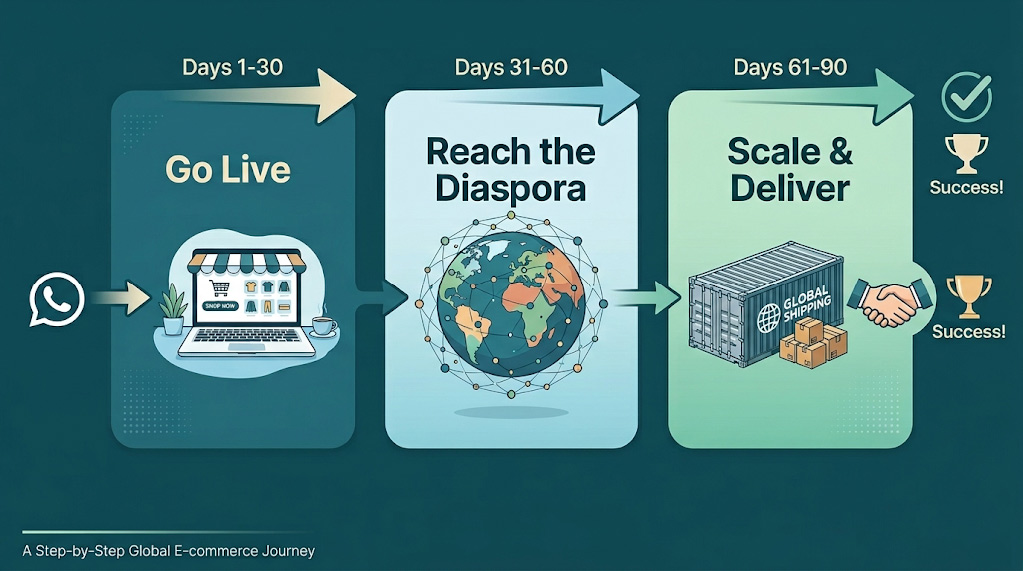
Stage 1: From Conversation to Transaction (Days 1–30)
In the first 30 days, the goal is to centralise operations and go live with a professional store.
- Store Deployment: Build a Shopify or WordPress store with proper product pages, inventory sync, and an automated checkout – replacing the back-and-forth of WhatsApp ordering.
- Order Sync: Convert manual order forms into a digital cart that tracks every transaction automatically.
- Trust Signals: Set up a security certificate (the padlock icon buyers see in their browser – a basic requirement for Google ranking) and write professional English product descriptions.
Stage 2: Reaching Diaspora Buyers (Days 31–60)
With your store live, the focus shifts to reaching buyers in diaspora communities across North America, Europe, Southeast Asia, and beyond.
- Community Channels: Tamil professional networks are most active on WhatsApp groups, Facebook communities (particularly trade and expatriate groups), and sector-specific Slack channels. These are where buying conversations actually happen. Direct outreach through these communities, combined with targeted social ads, reaches buyers more effectively than generic platform outreach.
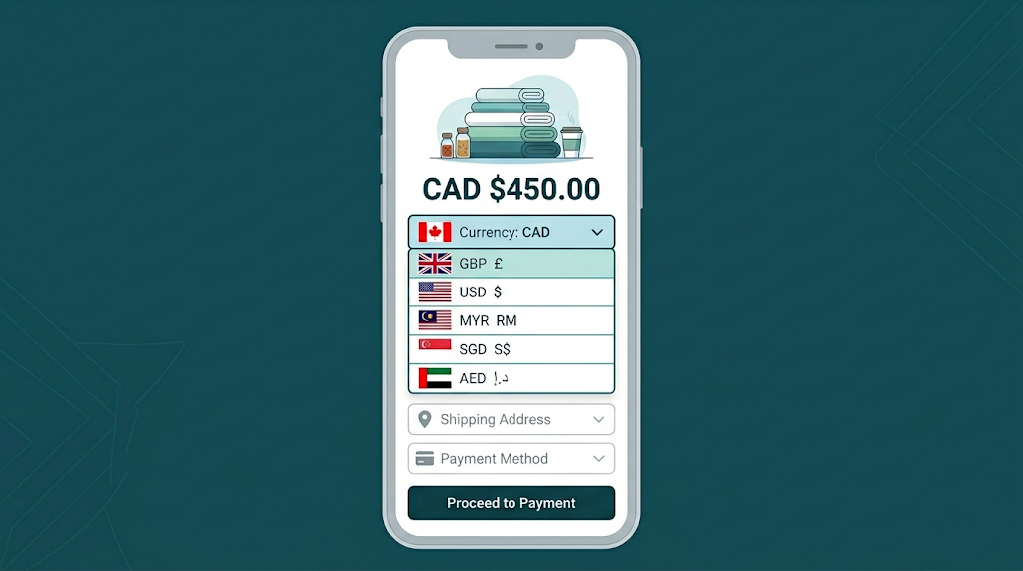
- Multi-Currency: Every buyer should see prices in their local currency – whether that is GBP, CAD, USD, MYR, SGD, or AED. Forcing buyers to calculate conversions increases cart abandonment.
- Shipping Clarity: Real-time shipping rate calculators at checkout remove one of the biggest friction points for international buyers.
Stage 3: Building for Global Distribution (Days 61–90)
The final stage positions your brand for wholesale and export conversations.
- B2B Positioning: Optimise your site for wholesale distributors across global trade hubs – from the Gulf and Southeast Asia to North America and Europe.
- Content Authority: Build topic clusters – a connected group of blog posts and pages around your specific niche – so Google sees your brand as the authority in your category.
- Wholesale Access: Set up distributor-specific portals for high-volume orders, separate from retail checkout.
4. What Does This Look Like in Practice?
How have Tamil businesses applied this approach?
Tamil SMBs that have moved through this three-stage process consistently run into the same discovery: the biggest cost is not the new platform – it is the fragmented vendor stack they were already paying for.
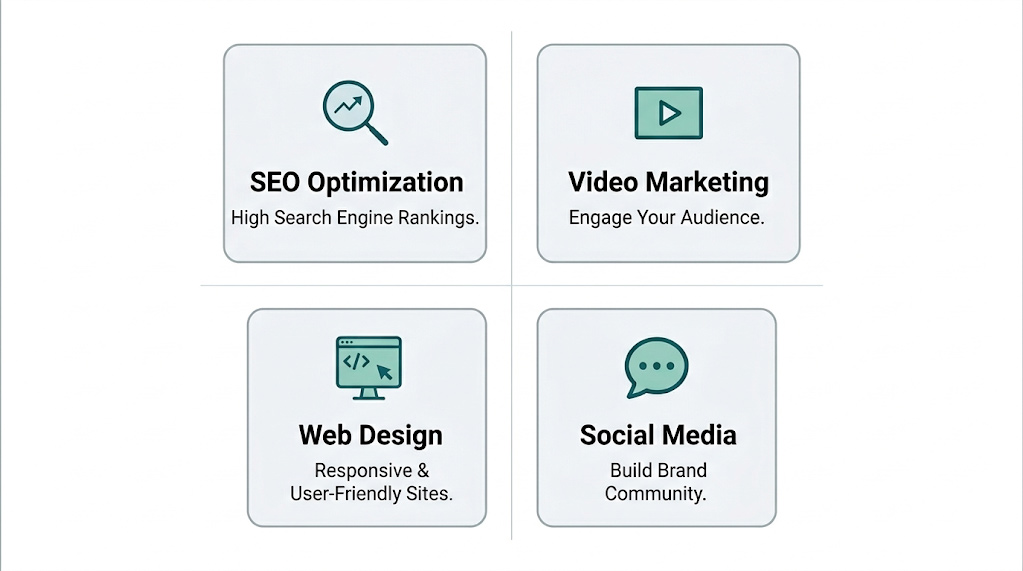
A common picture before consolidation: separate agencies for SEO, video production, web management, and social media. Each vendor has their own reporting, their own priorities, and no shared accountability for results.
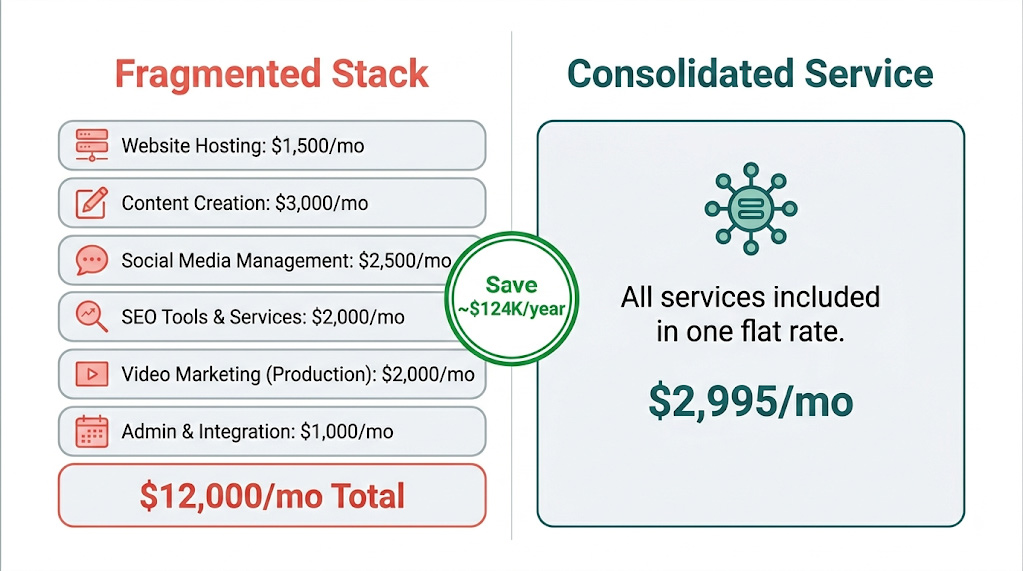
One e-commerce client working with Vilampara Media had been spending over $148,000 annually across six vendors before consolidating to a single integrated service at $24,000 per year – a saving of approximately $124,000 with better coordination across all channels.
The principle applies regardless of who manages your marketing: fewer handoffs, shared goals, and unified reporting produce better outcomes than a fragmented stack.
| “6 out of 10 patients that walk into our clinic comes from through online marketing.” – Sutharsan – NS Dental Care |
5. Technical Checklist
What does a globally-ready Tamil e-commerce store need?
Your store needs to meet current global standards to be visible and trustworthy to international buyers. Here is what that involves:
- Domain + Security Certificate: The padlock icon in your browser bar – a basic requirement for Google ranking in every market.
- Platform with Structured Data: Use Shopify or WordPress with structured data support – code that helps Google read and display your store correctly in search results.
- Multi-Currency Support: Every diaspora buyer should see prices in their local currency – GBP, CAD, USD, MYR, SGD, AED and more.
- Shipping Calculator: Real-time shipping rates shown at checkout, integrated with global carriers, so buyers know the full cost before committing.
- Google Analytics 4 (GA4): Google’s free website tracking tool – shows you where your visitors come from and what they do on your site.
- Mobile-First Layout: A fast-loading, mobile-optimised design – most diaspora buyers browse on their phones.
- English Product Descriptions: Clear, professional English copy alongside any Tamil content – essential for organic reach beyond your existing network.
6. Common Reasons Tamil E-Commerce Brands Stall
Why do many Tamil businesses fail to scale internationally?
Even with excellent products, many businesses hit a ceiling. It usually comes down to three avoidable mistakes.
The Tamil-Only Ceiling
If your content is only in Tamil, you are largely invisible to diaspora communities worldwide who search primarily in English.
One language. Half the market – gone.
The Local-Only Shipping Filter
Failing to set up or announce international shipping signals to global buyers that you are not ready for cross-border trade.
Your first impression online matters. If your store looks local-only, international buyers move on quickly.
The Fragmented Vendor Problem
Hiring separate agencies for SEO, video, and web management leads to misaligned strategies, overlapping fees, and no unified reporting.
Based on average vendor pricing, businesses commonly spend $10,000–$14,000 per month across these services before consolidating – with no single team accountable for overall results.
Comparison Tables
Table 1: 90-Day Scaling Timeline
| Phase | Duration | Primary Goal | Key Deliverable |
| Stage 1 | Days 1–30 | Centralise Operations | Shopify/WordPress Store Launch |
| Stage 2 | Days 31–60 | Diaspora Outreach | Multi-Currency & English Localisation |
| Stage 3 | Days 61–90 | B2B Export Positioning | Distributor Portal & Global SEO |
Table 2: Service Cost Breakdown
| Metric | Traditional Fragmented Stack | Integrated Service |
| Monthly Fee | ~$10,000–$14,000 | ~$2,000 |
| Annual Cost | ~$120,000–$168,000 | ~$24,000 |
| Service Scope | 5+ Different Vendors | Unified Tech + Marketing |
| Estimated Annual Savings | – | ~$96,000–$144,000 |
Note: Traditional stack estimate based on average market rates for SEO, video production, web management, and social media services as of 2025. Actual costs and savings vary by vendor and scope.
Table 3: Global Tamil Diaspora – Key Markets
| Region | Estimated Tamil Population | Typical Opportunity |
| Southeast Asia (Malaysia, Singapore) | ~2+ million | Retail, Social Commerce, Manufacturing |
| North America (Canada, USA) | ~500,000+ | Tech, Professional Services, Logistics |
| Europe (UK, Germany, France) | ~500,000+ | Financial Services, Professional Services |
| Middle East (UAE, Qatar, Bahrain, Saudi Arabia) | ~1.1 million+ | Trade, Distribution, E-commerce |
| Australia & New Zealand | ~100,000+ | Retail, Food, Professional Services |
*Estimates drawn from diaspora research and census data; figures vary by source and methodology. Gulf figure (~1.1 million) based on the 2016 Centre for Development Studies Tamil Nadu Migration Survey.
Table 4: Typical Vendor Cost Breakdown
| Service | Typical Monthly Cost | Consolidated Alternative |
| SEO & Content | ~$3,500 | Included |
| Video Production | ~$4,000 | Included |
| Web Management | ~$2,000 | Included |
| Social Media | ~$2,500 | Included |
| Total | ~$12,000 | ~$2,000 |
FAQ
1. Do Tamil businesses need a big budget to start e-commerce?
Not necessarily. The main upfront cost is platform setup – Shopify and WordPress both have affordable entry points. The more significant ongoing cost is usually marketing and tech management, which is where many businesses overspend by running multiple separate vendors.
2. Can I keep using WhatsApp alongside a proper store?
Yes, and many businesses do. WhatsApp remains useful for relationship-building and following up with existing customers. The key shift is moving the actual transaction to your store – which gives you inventory tracking, automated order confirmations, and visibility into where your buyers are coming from.
3. Why is English content necessary if I am targeting the Tamil diaspora?
Tamil diaspora communities worldwide primarily search in English when shopping online. Professional English product descriptions and blog content are what allow your store to appear in search results for buyers who do not already know you exist.
4. How do 2026 Google algorithm changes affect Tamil e-commerce stores?
Google continues to reward content that demonstrates genuine expertise and trustworthiness – what it refers to as E-E-A-T (Experience, Expertise, Authoritativeness, Trustworthiness). Publishing useful, niche-specific content consistently is one of the most effective ways for a smaller store to outperform larger generic competitors in search.
5. Which product categories work best for Tamil businesses going global?
Strong results tend to come from categories with clear diaspora demand: textiles and apparel, organic and specialty foods, manufacturing components, professional services, and IT products. The right fit depends on your existing product strength and which markets you are targeting.
6. Is it realistic to reach global distributors within 90 days?
Within 90 days, it is realistic to have your store, content, and wholesale infrastructure in place – meaning distributors can find you and evaluate you professionally. Closing actual agreements depends on product fit, pricing, and buyer timelines, which vary considerably.
Closing Thoughts
WhatsApp built your early business. It will not scale it globally.
The businesses that break through are not necessarily the ones with the biggest budgets. They are the ones that make the transition from informal to professional at the right moment – with the right platform, the right content, and a clear path to international buyers.
If you are a Tamil entrepreneur who has outgrown manual chat orders, the 90-day roadmap above is a practical starting point.
Vilampara Media works with Tamil SMBs through exactly this process. If you would like to talk through your situation, you can book a free strategy call at vilampara.com/strategy-call.