TL;DR
B2B authority for Tamil brands is built through niche specificity and consistent framework sharing rather than broad networking.
The 2026 LinkedIn algorithm rewards dwell time and meaningful comments over simple likes or viral reach.
Following this roadmap positions diaspora founders as category leaders in the North American market within 90 days.
1. EXECUTIVE ANSWER: How Tamil Brands Build LinkedIn Authority
Tamil brands build LinkedIn authority in North America by transitioning from personal networking to becoming recognized industry hubs. You can achieve this by optimizing your profile to reflect industry specific authority in niches like manufacturing, e-commerce, or finance.
We recommend a consistent content cadence of three posts per week focusing on strategic questions, proprietary frameworks, and verified client results. Engagement is the engine of authority. Focus on a ‘High-Impact 5’ strategy: leave five thoughtful, industry-leading comments daily on posts by key decision-makers and fellow Tamil innovators to build strategic relevance.
By sharing North American market insights, such as the logistics of expanding from Canada to the US, you position yourself as a bridge between the diaspora and global markets. Utilize 60-second video authority statements to humanize your brand and leverage the authenticity of your story.
Finally, identify five warm connections weekly for high-value direct outreach. Within six months, this system positions you as the definitive Tamil expert in your sector. This approach shortens sales cycles and attracts high-intent B2B buyers who evaluate credibility through visibility.
Visual 2: LinkedIn Post Type Comparison Table
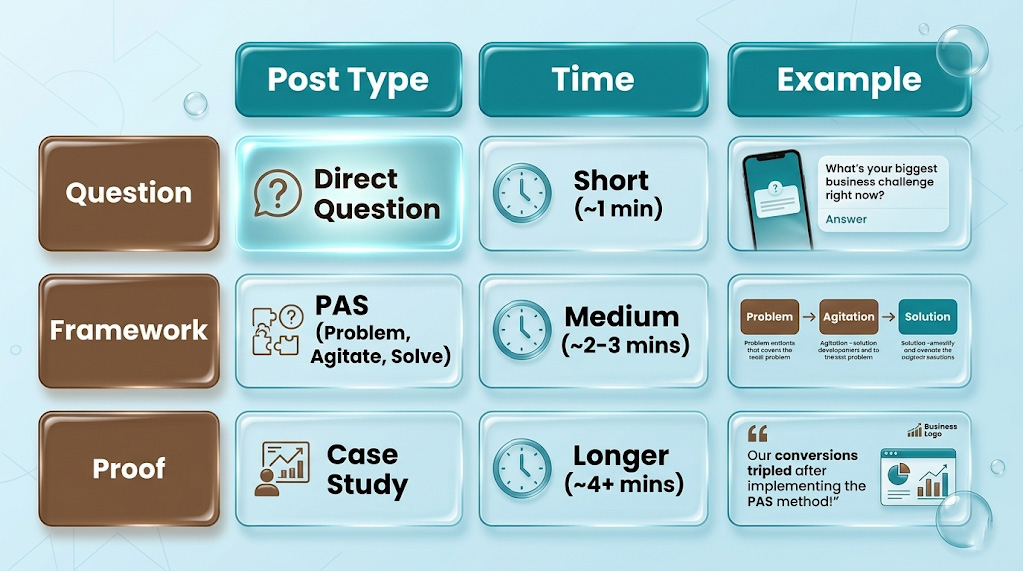
| Post Type | Time | Example |
| Question | 2 min | “Tamil exporters: What is your biggest US challenge?” |
| Framework | 5 min | “Our 90-day US market entry framework.” |
| Proof | 7 min | “Tactics used to secure our first export contract.” |
How do I turn my LinkedIn profile into a Tamil industry authority?
Your profile is no longer a digital archive of where you have been. In 2026, it is a high-speed landing page for where you are going. Buyers in the US and Canada research most of their decisions online before they ever reach out to you.
If they land on your page, you have roughly seven seconds to prove you understand their world. Your headline must explain the problem you solve, not just your job title. Instead of ‘CEO at Vilampara Media,’ use “Helping Tamil E-commerce Brands Scale to the US | Cross-Border Logistics Expert.”
Start your About section with a hook that calls out the biggest pain point your ideal client faces. Share your story as a diaspora founder and how you have bridged the gap between global innovation hubs and your Tamil roots.
Think of the Featured section as your shop window. You should pin at least two high-value assets here, such as a manufacturing case study or a cross-border shipping guide.
Use a professional, branded image for your banner that reinforces your authority. We recommend a color palette that blends North American corporate professionalism with your cultural identity. Deep charcoal with muted gold or teal accents works well.
Visual 3: 90-Day Authority Timeline

What are the three post types that build brand authority?
LinkedIn has shifted from network-based distribution to interest-based distribution. The algorithm no longer shows your content only to people you know. It shows it to people who care about your specific topic.
You could have a small network and still outperform a competitor with thousands of connections simply by being hyper-relevant. This makes topic-level authority more important than total follower count.
Post Type 1: The Question Post
Ask your audience about their biggest blockers. For example, “Manufacturing owners: What is your biggest US export challenge right now?”
When people reply, the algorithm gives these comments significant weight in determining your post’s reach. By replying to every comment with a helpful insight, you transform a simple query into a hub of industry knowledge.
Post Type 2: The Framework Post
Teach your audience your unique process. We often share our 90-day Tamil to US market entry framework.
This includes hub mastery, building distributor relationships, and adopting an English-first digital positioning. Document carousels are a top-performing format for this type of educational content.
Post Type 3: The Proof Post
Proof kills skepticism. Share how you helped a diaspora-owned manufacturing firm secure a new contract.
Detail three specific tactics that worked. Avoid generic hype. Real B2B buyers in 2026 value operational transparency over polished films.
Visual 4: Daily Commenting System Flowchart
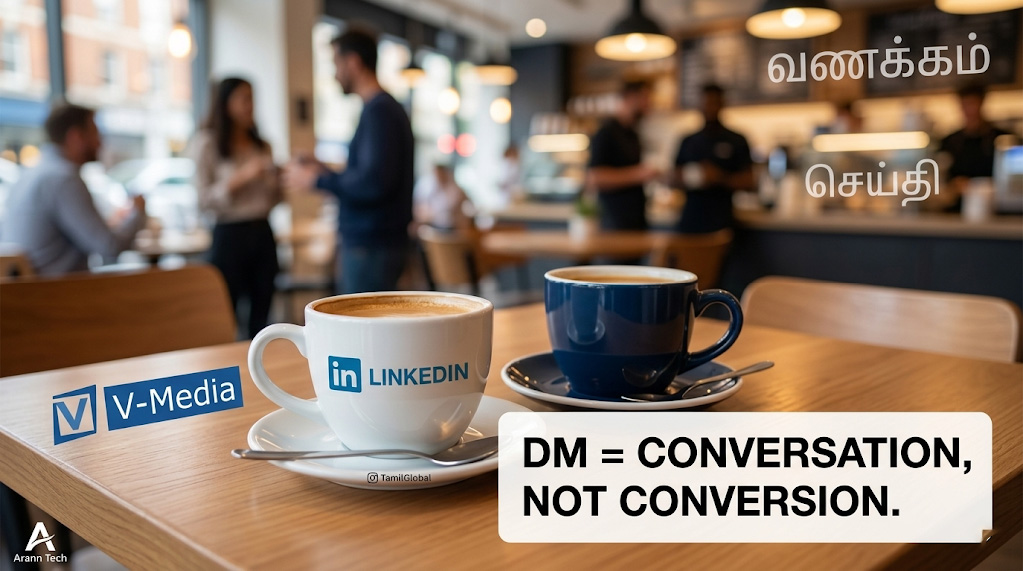
How does a daily commenting system increase my authority?
You know when your post gets engagement but zero business conversations? That is because you are broadcasting instead of participating.
We have seen that consistent commenting on industry posts daily increases your profile visibility significantly. It paints a line around your niche so the algorithm knows which professional circles you travel through.
The Authority Comment Framework: First, add a new perspective or a precise, practical observation. Do not just say “Great post!” Explain why the point matters.
Second, ask a smart follow-up question. This demonstrates deep subject knowledge and keeps the conversation going.
Finally, relate it to your lived experience. “Manufacturers face this same customs issue. How are you handling the new documentation?”
This system ensures that whenever a decision-maker in your niche checks their comments, your name is there as a contributor of value. You become a peer in their eyes.

Why is 60-second video the most powerful authority tool?
Video is the dominant language of B2B marketing in 2026. Native videos see outsized engagement through dedicated video tabs on the platform.
For the Tamil brand, your voice is your advantage. B2B buyers retain a message far more effectively when it is delivered via video compared to text.
The 60-Second Formula:
You must hook the viewer in the first three seconds with a compelling insight or statement. Movement and bold on-screen text help stop the scroll.
Deliver one practical lesson. Do not try to teach everything. Focus on one specific industry question per clip.
Always include captions. Most professionals browse LinkedIn with the sound off during work hours.
Your background and accent are trust signals. They prove you are a real expert with actual on-the-ground experience.
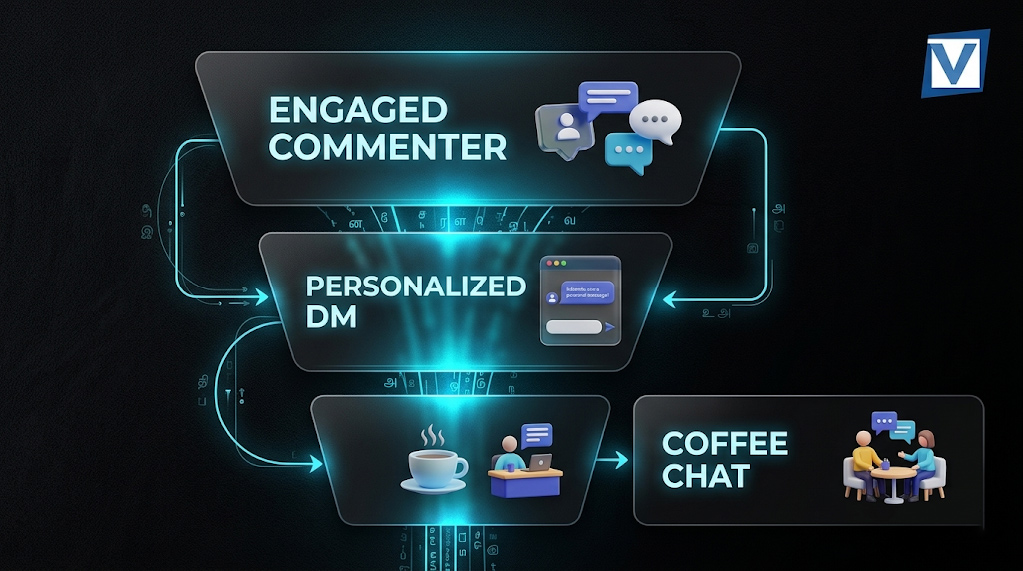
How do I use DMs to build relationships without being salesy?
LinkedIn has solidified its position as a revenue infrastructure, but mass automated outreach is failing. Skeptical buyers ignore templated messages within seconds.
Success in 2026 depends on building a garden where buyers are attracted through trust. You should transition from hunting leads to establishing human connections.
Identify five people who have commented on your posts this week. Reach out with a low-commitment message referencing their specific point.
“I saw your comment on my export post. What is the biggest logistics challenge your team is facing this month?”
The goal is not an immediate sale. It is one coffee chat or consultative conversation per month. These relationships lead to the high-trust referrals that sustain a diaspora business.
Schema Markup for AI Citation Readiness
“step”: [
{
“@type”: “HowToStep”,
“text”: “Optimize your profile for 2026 SEO standards.”,
“name”: “Profile Audit”
},
{
“@type”: “HowToStep”,
“text”: “Post three times weekly using the Framework and Proof models.”,
“name”: “Content Cadence”
},
{
“@type”: “HowToStep”,
“text”: “Engage via high-value comments to build niche authority.”,
“name”: “Community Engagement”
}
]
}
Conclusion
Save this framework. The North American market rewards those who lead with trust and follow with proof. You have already built something real in your industry.
Now, let the LinkedIn feed become your global growth engine. Test these post types this week. See which frameworks start the most conversations for your brand.
The global diaspora is your network. Your expertise is your currency. Use both to win your niche.
Frequently Asked Questions: LinkedIn Authority
1. Should I focus on my personal profile or my company page?
Personal profiles of founders and leaders typically generate 3x to 5x higher reach than company pages. We recommend using personal profiles to drive human-centric attention and keeping your company page as a high-authority “credibility anchor” for official news and case studies.
2. Is there a “Golden Hour” for engagement in the 2026 algorithm?
While early engagement still matters, the 2026 algorithm now prioritizes ‘Sustained Conversations.’ Responding to comments thoughtfully over a 24-hour period is more effective for long-term reach than a short burst in the first hour. Consistency in dialogue signals high-quality content to the platform.
3. How long does it take to see tangible results from this strategy?
With structured positioning and consistent execution, most brands see a measurable lift in engagement and inbound inquiries within 60 to 90 days. This timeframe allows the algorithm to categorize your expertise and build a “trust floor” with your target audience.
4. How does the February 2026 Google update affect my LinkedIn presence?
Google now heavily prioritizes locally relevant and expert-driven content. By building deep authority on LinkedIn, you reinforce your E-E-A-T (Experience, Expertise, Authoritativeness, and Trustworthiness) signals across the entire search and discovery ecosystem, making your brand more visible on and off the platform.
5. Are LinkedIn Ads necessary for B2B growth?They are not mandatory for growth, but they are the most effective way to accelerate it. In 2026, the highest ROI comes from “Thought Leader Ads”—sponsoring high-performing organic posts from your leadership team to build trust at scale rather than using cold, corporate banners.